

- AI
- News
- LLM
- Infrastructure
Google Suncatcher: Gemma 4 Phones Home From the First TPU in Orbit
Google's Suncatcher satellite ran Gemma 4 on a data center TPU in orbit and sent back a haiku. What really happened, the hard numbers, and what the 20-minute power window teaches every edge AI team.
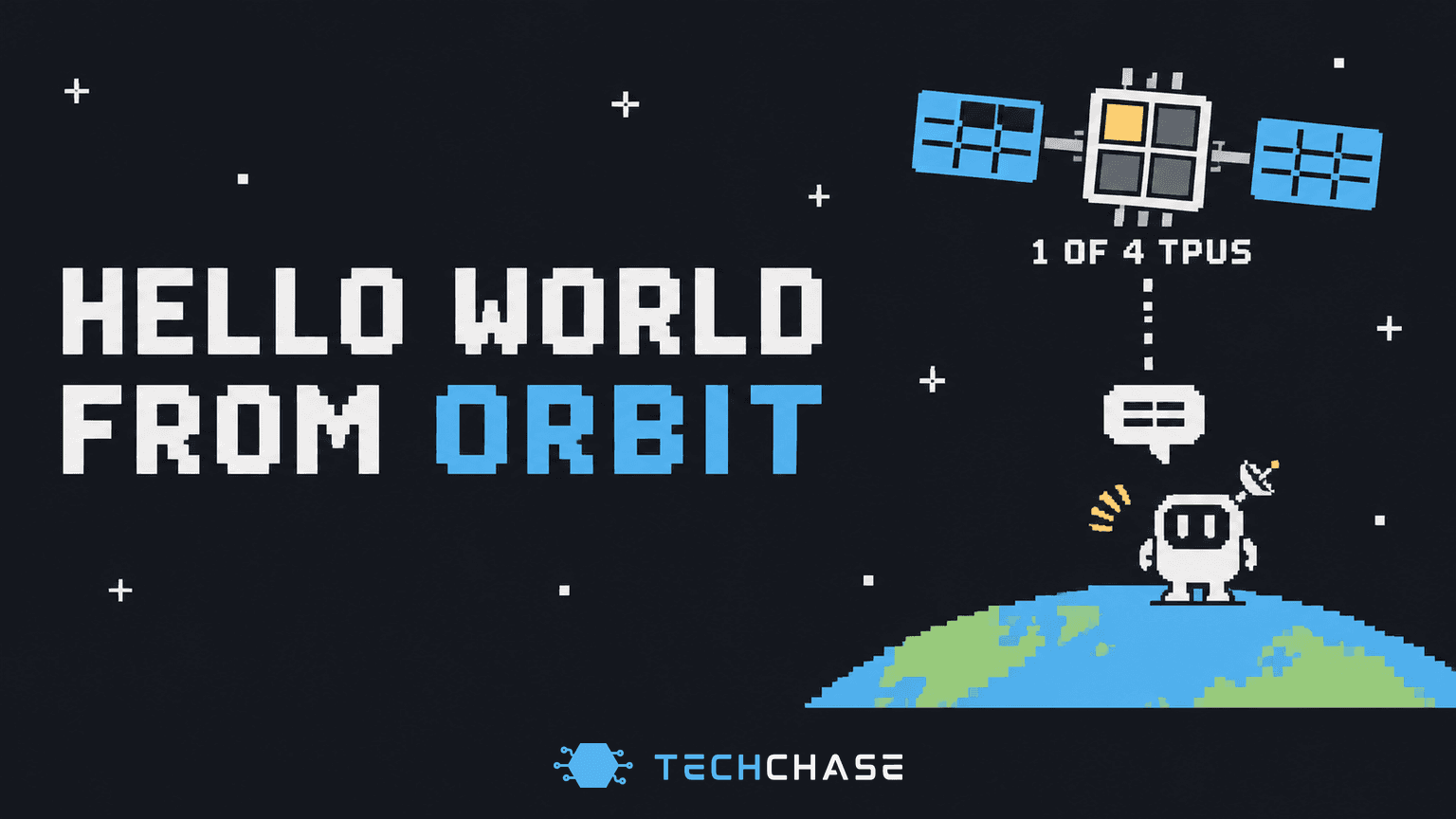
Picture this: you send a prompt to your model, and the answer doesn't come back in two seconds. It comes back when a satellite flies over Svalbard, Norway, and your ground station catches it. That is exactly how Google's Project Suncatcher team got its first reply this week: a haiku, written by Gemma 4 on a data center class TPU, in orbit.
Think of it like a pen pal on a ship. You hand your letter over when the ship is in port, it gets answered at sea, and you read the reply when the ship comes back. The poem is cute. The interesting part is everything that makes the "ship" so hard to run.
💬 The haiku is the demo. The power budget is the story.
In this post you get what actually happened (with dates), the numbers Google and TechCrunch published, two myths to drop, a runnable sketch of the "phone home" pattern, and our take on what it means for teams running AI at the edge today.
📡 What Happened: From Launch to "Hello World"
| Date | Milestone |
|---|---|
| 2025-11-04 | Google announces Project Suncatcher: solar-powered satellite constellations with TPUs and optical links (Google Research) |
| 2026-10-01 | The prototype satellite, built with Planet, launches on SpaceX's Transporter-18 rideshare (Google) |
Keep reading
More articles on AI, automation and software engineering from the TechChase team.